Heavy Machines, Hard Choices
Choosing SUV tires in Abu Dhabi is rarely as simple as matching a size. The same vehicle may crawl through city traffic on Monday, cruise a highway at speed on Thursday, and wander onto a sand track at the weekend. Each of those jobs asks something different of the rubber. This guide explains the main tire types, how to read the numbers on the sidewall, and how to match a set to the way you actually drive.
Why SUV Tires Are Different
SUVs and 4x4s are taller and heavier than a saloon car, and they carry more of their mass high off the ground. Their tires must support greater loads, shed more heat, tolerate more sidewall stress, and keep the vehicle stable in corners and under braking. A tire that suits a hatchback may be wholly inadequate for a vehicle twice its weight.
The Short Answer
Highway-terrain tires suit mostly sealed-road driving. All-terrain tires suit drivers who mix tarmac with desert tracks. Mud-terrain tires suit specialist off-road use and trade comfort and wet grip for toughness. Whatever the type, match or exceed the load and speed ratings your vehicle requires, and fit the tires as a matched set.
Know Your Driving Profile
The costliest mistake is buying for the trip you take once a year. Be honest about the other 360 days.
Highway and City Commuting
If most of your kilometers are on sealed roads, you want comfort, low noise, strong wet grip, decent fuel economy, and long life. Those qualities come from a road-biased tread.
Weekend Desert Trips
Occasional sand and gravel tracks call for durable sidewalls, reliable traction, and a tire that tolerates lower pressures. They do not call for the most aggressive tread on the market.
Heavy Loads and Towing
Full luggage, roof racks, trailers, and boats raise the demands on a tire. In this case the load capacity and the strength of the construction matter more than the tread pattern.
The Four Main SUV Tire Types
Most SUV tires fall into four families.
Highway-Terrain Tires
Highway-terrain tires have smooth, closely spaced tread blocks. They are quiet, comfortable, and grip on wet and dry tarmac, and they tend to last longest. Their weakness is loose ground, where they offer limited traction. For most owners, they are the right choice.
All-Terrain Tires
All-terrain tires have blocker tread and stronger sidewalls. They are a compromise: acceptable road manners, plus better traction on gravel and desert tracks. In exchange, they are usually noisier, can raise fuel consumption slightly, and may wear faster than highway-terrain tires.
Mud-Terrain Tires
Mud-terrain tires have deep voids between huge tread blocks, designed to shed mud and grip rock. They are noisy, ride hard, give up wet grip, and wear quickly on tarmac. They are worth it only for serious off-roading.
Rugged-Terrain and Hybrid Tires
Rugged-terrain tires sit between all-terrain and mud-terrain designs. They offer a more aggressive look and more off-road bite without the full penalties of a mud-terrain tire. Quality varies widely, so read reviews for the specific model.
Tires and Sand: What Works in the Dunes
Sand rewards a different strategy from mud.
Flotation and Lower Pressures
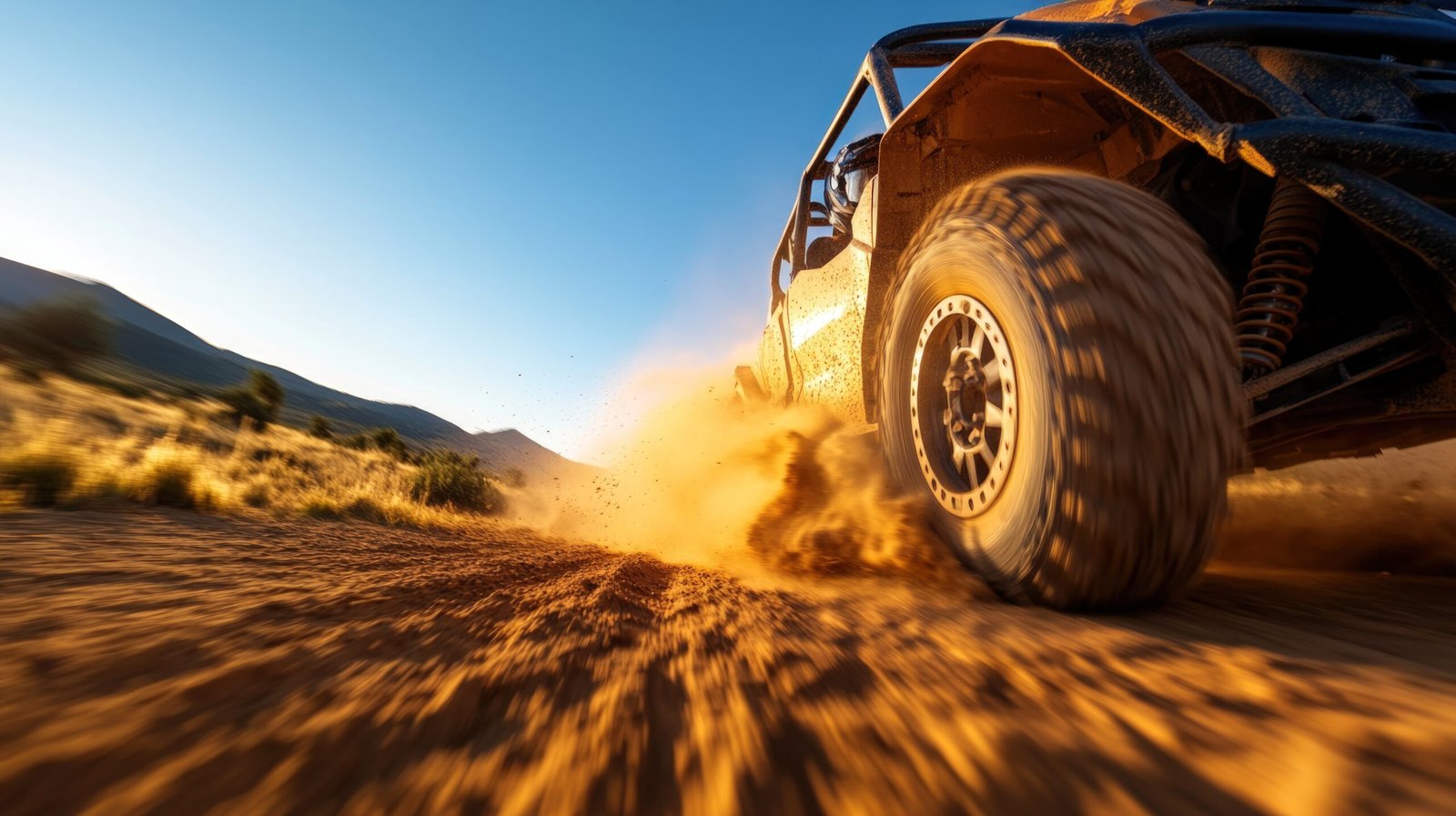
In sand, the goal is to stay on top. A wide contact patch spreads the vehicle’s weight, and lowering the pressure lengthens that patch. Many drivers reduce pressures substantially, often to somewhere around 15 to 20 psi, although the right figure varies with the tire, the vehicle, and the dune conditions. Carry a compressor and a gauge, and reinflate before returning to tarmac. Low pressure combined with speed or sharp steering can unseat the tire’s bead from the rim.
Why Aggressive Tread Is Not Always Better
Deep lugs claw through mud. They do not make a tire float on sand. In the dunes, the size of the tire, the softness of the sidewall, and the pressure you run often matter more than the depth of the tread. A decent all-terrain tire can do well in sand, and it will treat you far more kindly on the drive home.
Decoding Size, Load, and Speed Ratings
The sidewall tells you almost everything.
Metric and Flotation Sizes
A metric size such as 265/65 R17 gives the width in millimeters, the sidewall height as a percentage of that width, and the rim diameter in inches. An LT prefix marks a light-truck tire. Flotation sizes, such as 33×12.50R17, give the overall diameter and width in inches instead. Do not guess when converting between the two systems. Ask the technician to check the fit.
Load Index and Load Range
The load index tells you how much weight each tire can carry. For example, a load index of 112 equals 1,120 kg per tire. Passenger SUV tires may be marked XL for extra load. Light-truck tires use load ranges, usually C, D, or E, which indicate the strength of the construction. A higher load range is stronger but stiffer, and it needs higher pressures to work properly. Never fit a tire with a lower load index than the vehicle manufacturer specifies.
Speed Rating
The letter after the load index gives the maximum speed the tire is designed for: T is 190 km/h, H is 210 km/h, and V is 240 km/h. Many all-terrain tires carry lower ratings than road tires. Make sure the rating meets your vehicle’s requirement, particularly when you drive loaded at highway speeds.
Keeping Overall Diameter in Check
Changing tire size changes more than the look. It alters the speedometer reading, the behavior of the ABS and stability systems, and the gearing. As a rule, keep the overall diameter within about 3 percent of the original.
Going Larger: Lifts and Fitment
Bigger tires and lift kits often bring rubbing at full steering lock, arch clearance problems, and a changed rim offset. A technician can check the clearances and recommend a suitable rim width and offset. Re calibrate the speedometer if needed, and check that the modification is acceptable for registration and insurance.
Heat, Pressure, and Highway Safety
Heavy vehicles and hot roads are a demanding combination.
Tire Pressure for Loads and Towing
Start with the placard on the driver’s door or the owner’s manual, which gives pressures for normal and fully loaded conditions. Heavy loads and towing usually call for higher pressures. Check them when the tires are cold, ideally in the morning before driving, and do not ignore the pressure warning light.
Heat Build-Up
A heavy vehicle on a long highway run over summer asphalt generates a great deal of heat. Under-inflation is the main enemy, because it makes the sidewalls flex more and heat up faster. Inspect the sidewalls regularly, and replace tires that show cracking.
Matching Tires on 4WD and AWD Vehicles
In a four-wheel-drive or all-wheel-drive vehicle, all four wheels are linked through the drive train. Tires of different rolling circumference, whether from different sizes or from different levels of wear, make the wheels turn at slightly different speeds. That strains the center differential, transfer case, or coupling. For that reason, many manufacturers advise replacing all four tires together, or at least keeping tread depth within a strict limit. Use the same brand, model, and size, and rotate regularly. Check your owner’s manual for the limit that applies to your vehicle.
Buying Checklist
- Confirm the size, load index, and speed rating from the placard or manual.
- Pick the tire type from an honest assessment of your driving.
- Check the DOT date code on every tire.
- Ask for the full fitted price, including balancing, valves, and disposal.
- Ask whether the warranty covers off-road use, since many do not.
- Check the spare. If it is a full-size spare, make sure its age and condition match the set.
- Plan a wheel alignment after fitting.
Care After You Buy
SUV tires work hard, and they repay care.
Five-Tire Rotation
If your vehicle has a full-size matching spare, include it in the rotation. Rotating spreads the wear and extends the life of the set. Follow the pattern in your manual, and rotate at the interval the manufacturer recommends, which is typically around 10,000 km.
Alignment and Balancing
Larger tires often need heavier counterweights, so balancing is essential. Alignment should be checked after fitting new tires, after fitting a lift kit, and after any hard off-road use, since impacts can knock the geometry out of specification.
Inspection After Off-Road Trips
Check the sidewalls for cuts and bulges, and look for embedded thorns or stones. Rinse packed sand out of the wheels, since it can unbalance them. Restore the correct pressure straight away. Remember that damage to the sidewall cannot be repaired, and the tire must be replaced.
Common Mistakes
- Choosing mud-terrain tires for mostly road use. You pay in noise, wear, and wet grip.
- Ignoring the load rating. A tire that is too weak for the vehicle can fail under load.
- Mixing tire types or wear levels on a 4WD. It strains the drive train.
- Forgetting the spare. An old or mismatched spare may not help when you need it.
- Over-sizing without checking clearance. Rubbing and speedometer errors follow.
- Driving on tarmac at sand pressures. It overheats the tire and risks damage.
- Waiting for the tread to wear out. Age and sidewall cracks can retire a tire first.
Conclusion
The right set of SUV tires is the one that fits how you really drive. Match the type to your driving, respect the load and speed ratings, buy a matched set, and look after them.
Quick Selection Guide
- Mostly sealed roads: highway-terrain tires.
- A mix of tarmac and desert tracks: all-terrain tires.
- Serious off-roading, and you accept the road penalty: mud-terrain or rugged-terrain tires.
- Heavy loads or towing: check the load index and consider a higher load range.
- In every case: fit a matched set, confirm the ratings, check the date codes, and balance and align after fitting.
Where to Buy SUV and 4×4 Tires in Musaffah
RAS Auto Services in Musaffah, Abu Dhabi offers tires and rims for sedans, SUVs, and 4x4s, along with fitting, electronic wheel balancing, and computerized wheel alignment. Bring your tire size or your vehicle details, and ask for the fitted price before you decide. Visit the workshop at 17th St, Musaffah M-32/2, or call +971-54-779-3848.