
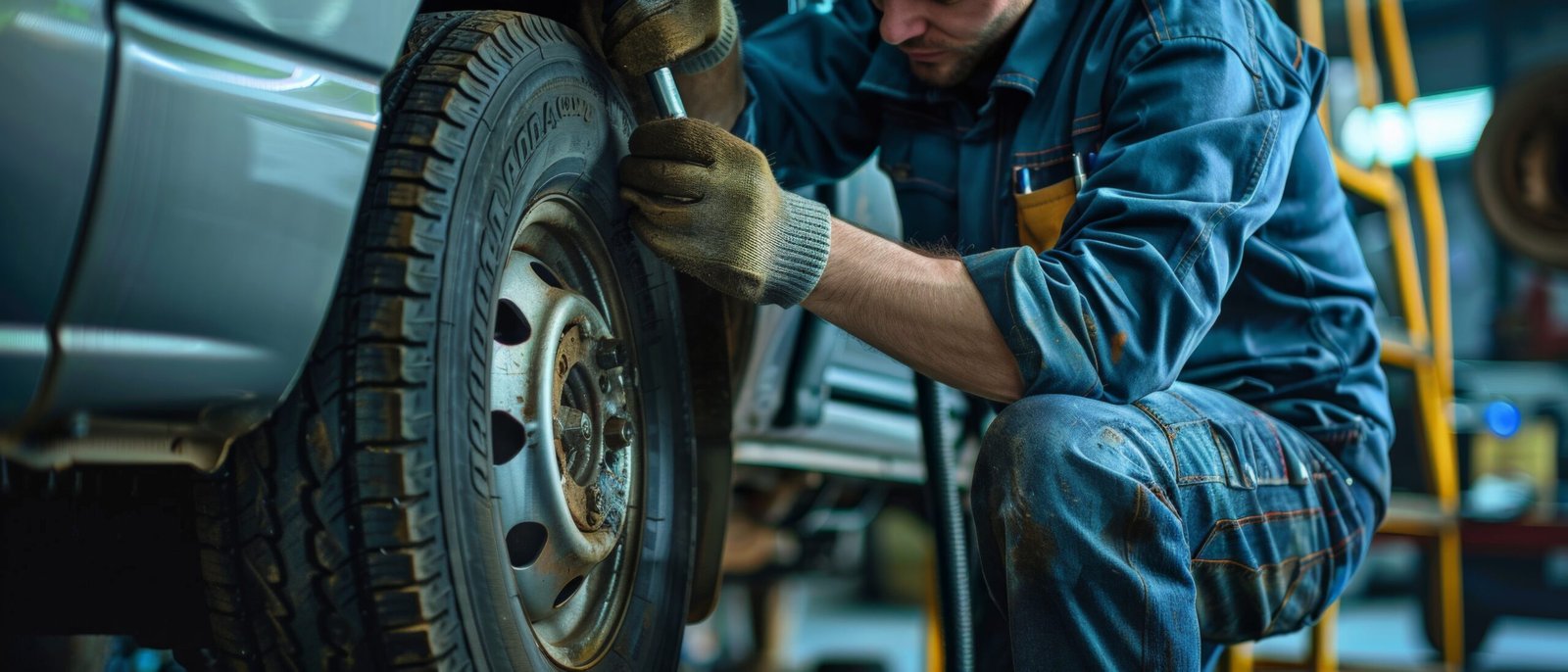
A Small Hole, a Big Decision
Every driver in Abu Dhabi will meet a tire puncture eventually, and the question that follows is always the same: can it be repaired, or must the tire be replaced? The answer is not a matter of opinion. It depends on where the damage sits, how large it is, and what the tire endured before it reached the workshop. Understanding those factors lets you judge a quote with confidence and avoid both an unnecessary replacement and an unsafe repair.
Why Punctures Are So Common
A tire spends its entire life rolling over whatever the road leaves behind. Nails, screws, metal off cuts, shards of glass, and sharp stones all find their way into the tread. Most punctures do not announce themselves with a bang. They begin as a pinhole and release air so slowly that the first sign is a tire that looks a little softer than the other three.
The Short Answer
A tire can usually be repaired when the puncture is in the central tread, no larger than about 6 mm, and the rest of the tire is sound. It must be replaced when the damage is in the sidewall or shoulder, when the hole is large, or when the tire was driven on while flat. The sections below explain the reasoning behind those rules.
How a Tire Holds Air
A repair only makes sense once you know what it is repairing.
The Inner Liner and the Bead
Inside a tubeless tire lies a layer of airtight synthetic rubber called the inner liner. It does the job that an inner tube once did. At each edge of the tire sits the bead, a hoop of steel wire wrapped in rubber, which seals against the rim. Air stays in because these two features work together. Any repair, therefore, must restore the integrity of the liner, not merely stop a hole in the tread.
Why the Location of Damage Matters
Three zones of a tire behave very differently. The crown, the broad central tread, is backed by stiff steel belts and flexes relatively little. The shoulders, where the tread curves into the sidewall, flex more. The sidewall flexes constantly and carries only thin reinforcement. A repair holds where the rubber is stable and fails where the rubber moves. That is why the location of the injury matters more than the size of the hole.
When a Tire Can Be Repaired
Three conditions must all be met.
Punctures in the Tread Crown
The classic repairable injury is a nail or screw that has pierced the central tread. The steel belts beneath spread the load, the area is stable, and a correctly installed repair can last for the remaining life of the tire.
The Six-Millimeter Rule
Industry guidance generally limits repair to punctures no more than 6 mm, roughly a quarter of an inch, across. Beyond that, too much material has been lost around the hole to hold a repair reliably. The injury should also be a clean puncture running roughly perpendicular to the tread, not a slash or an angled tear. Repairs must never overlap, and several injuries sitting close together may rule out repair altogether.
A Sound Tire Overall
A repair only makes sense on a tire worth keeping. The tread should sit comfortably above the commonly cited 1.6 mm minimum, the sidewalls should be free of cracks and bulges, and the tire should not be so old that it is nearing the end of its useful life anyway. Paying to repair a tire that needs replacing within months is a poor trade.
When a Tire Must Be Replaced
Some injuries cannot be made safe, however skillful the repair.
Sidewall and Shoulder Damage
There is no approved way to repair a puncture, cut, or deep scuff in the sidewall or shoulder. These zones flex with every rotation, and any patch would work loose. Exposed cords in these areas are a clear instruction to replace the tire.
Large Holes, Cuts, and Bulges
A hole wider than about 6 mm, a slash, or a gash that exposes the cords calls for replacement. So does a bulge or bubble, which signals that the internal plies have separated. A bulge is a failing structure, and it can rupture without warning.
Driven on Flat: Hidden Internal Damage
Driving even a short distance on a deflated tire can do serious harm. The sidewall collapses and folds, and its inner surface grinds against itself. The result is creasing, discolored rubber, and a fine dust of worn liner inside the tire, none of which is visible from outside. A technician can only find it by dismounting the tire. If the damage is there, the tire cannot be saved.
Worn, Aged, or Heavily Repaired Tires
A tire with tread close to its limit, an old date code, or several previous repairs is rarely worth another one. The same goes for a tire that reveals an earlier plug-only repair with corrosion creeping along the steel belts. Replacement is the safer and often the more economical choice.
Plug, Patch, or Patch-Plug: Repair Methods Compared
Not all repairs are equal, and the method matters as much as the verdict.
String Plugs: A Temporary Fix
A sticky rubber string pushed in from outside seals a puncture quickly, without removing the wheel. It is useful in a roadside emergency and nothing more. Without inspecting the inside, nobody knows the extent of the damage, and a plug alone does not seal the inner liner.
Internal Patches
A patch applied only to the inside seals the liner but leaves the puncture channel open. Moisture can then reach the steel belts and corrode them from within, which weakens the tire over time.
The Combination Patch-Plug
A patch-plug combines a rubber stem that fills the puncture channel with a patch that bonds to the inner liner. It seals both the hole and the liner, which is why it is considered the proper permanent method.
What a Proper Repair Involves
A correct repair follows a sequence, and skipping any step undermines the rest.
- The wheel is removed, the tire is fully deflated, and it is dismounted from the rim.
- The tire is inspected inside and out for hidden damage, sidewall creasing, and belt separation.
- The object is removed and the injury is probed to confirm its size and angle.
- The channel is reamed to clean it and clear any loose cords.
- The inner liner around the injury is buffed, and vulcanizing cement is applied.
- The patch-plug is installed and rolled firmly to bond.
- The tire is remounted, inflated to the correct pressure, balanced, and checked for leaks. The wheel is then refitted, with the nuts tightened to the specified torque.
A job that skips the dismounting step is not a full repair. The whole procedure often takes around half an hour.
Special Cases
Some tires and vehicles need extra care.
Run-Flat and High-Performance Tires
Run-flat tires have reinforced sidewalls that carry the car for a limited distance after pressure loss, which makes hidden damage likely if they have been driven low. Many manufacturers advise against repairing them, and some restrict repairs on high-speed-rated performance tires. Always ask whether the manufacturer permits repair of your tire.
Pressure Sensors and Liquid Sealant
Tire pressure monitoring sensors sit inside the wheel, and a technician must work around them without damaging them. If you have used an aerosol sealant in an emergency, tell the technician. Sealant makes internal inspection messier and can interfere with the sensor.
All-Wheel-Drive Vehicles and Matching Tires
When one tire has to be replaced, a new tire next to three worn ones creates a small difference in rolling circumference. On an all-wheel-drive car, that difference can strain the drive train. A technician may recommend replacing tires in pairs or as a full set. Ask before you decide.
Finding the Culprit: Nails, Valves, and Rims
Not every leak is a puncture.
Slow Leaks vs Sudden Pressure Loss
A slow leak shows up as a tire that loses a few psi every day, or a pressure warning light that returns after you inflate. Sudden loss points to a large hole or a failed valve. A spray of soapy water over the tire and rim will reveal the source as a stream of tiny bubbles.
Valve Stems, Beads, and Rim Corrosion
A cracked valve stem, a worn valve core, corrosion on the bead seat of an alloy rim, or a leaking sensor seal can all let air out. These faults are often cheaper to fix than a tire repair, and replacing the tire would not cure any of them. A proper diagnosis checks the whole wheel, not just the tread.
What to Do When You Get a Puncture
What you do in the first few minutes affects whether the tire survives.
At the Roadside
Slow down smoothly, switch on your hazard lights, and move to a safe place well away from traffic. Do not keep driving on a flat tire, even a short way. Use the spare or call for help rather than changing a wheel in a live lane. If you can see the nail or screw, leave it in place. It may slow the air loss, and it helps the technician find the injury.
Getting to a Workshop Safely
If you fit a compact spare or use an emergency sealant, drive gently and go straight to a workshop. A compact spare carries a speed limit printed on it, so follow it. Avoid highways until the proper tire is back on the car.
UAE Conditions: Heat, Debris, and Speed
Local conditions change the odds.
Construction Debris and Industrial Roads
Drivers who pass construction sites, industrial zones, and roadworks pick up nails, screws, and metal off cuts more often. Steer around loose debris where you can, and check your tires after driving through a work zone.
Heat, Pressure, and Repaired Tires
Heat raises tire pressure, and a tire that has been run soft in summer builds up extra heat inside. That can cause internal damage that never shows on the outside. Check pressures cold, ideally in the morning before driving, and recheck a freshly repaired tire after a day or two to confirm that it is holding air.
Common Myths
- A plug from outside is a permanent repair. It is not. It is a temporary fix.
- Any puncture can be patched. It cannot. Location and size decide.
- A repaired tire is unsafe. Not when the repair is done to standard on a suitable tire.
- Sealant is a permanent fix. It is a short-term measure.
- If the tire holds air overnight, it is fine. Internal damage can remain hidden even when the tire holds pressure.
- A pressure warning light always means a puncture. It can also reflect a gradual loss or a change in temperature.
Questions to Ask Your Technician
- Will you remove the tire from the rim to inspect the inside?
- Where exactly is the damage, and how large is it?
- Do you use a patch-plug combination?
- Is my tire run-flat or high-speed-rated, and does its manufacturer allow repair?
- Is the tread depth and age still worth a repair?
- Will you balance the wheel afterwards?
Conclusion
A puncture is an inconvenience, not a catastrophe, provided you act sooner rather than later and let the right person look inside the tire.
Quick Decision Guide
- Small puncture in the central tread, tire in good condition: repair.
- Damage to the sidewall or shoulder: replace.
- Hole larger than about 6 mm, a cut, or a bulge: replace.
- Driven on flat: have it inspected inside, and expect to replace.
- Worn, old, or already heavily repaired: replace.
- Unsure: have the tire dismounted and inspected.
Where to Get Your Tire Checked in Musaffah
RAS Auto Services in Musaffah, Abu Dhabi offers tire repair and puncture fixing, along with tires and rims, electronic wheel balancing, and computerized wheel alignment. A technician can inspect your tire inside and out and tell you whether it can be repaired or needs replacing. Visit the workshop at 17th St, Musaffah M-32/2, or call +971-54-779-3848.